The role of art therapy in mental health

There are times when words don’t quite capture what you’re feeling. You might know something feels heavy, confusing, or emotionally exhausting, but putting it into conversation can feel difficult. That’s often where creative expression can help.
Art therapy offers a different way to explore emotions and experiences. Instead of relying only on conversation, it uses creative activities such as drawing, painting, collage, sculpture, and visual journalling to support emotional reflection and psychological wellbeing.
You don’t need to think of yourself as creative to benefit from art therapy. In fact, many people who try it haven’t picked up a paintbrush or sketchbook since school. The focus isn’t on talent or producing impressive artwork. It’s about giving yourself space to express thoughts and emotions that may feel hard to explain out loud.
What is art therapy?
Art therapy is a form of psychotherapy that combines mental health support with creative expression. A trained therapist guides the process, helping you explore emotions, experiences, memories, and patterns through artistic activities.
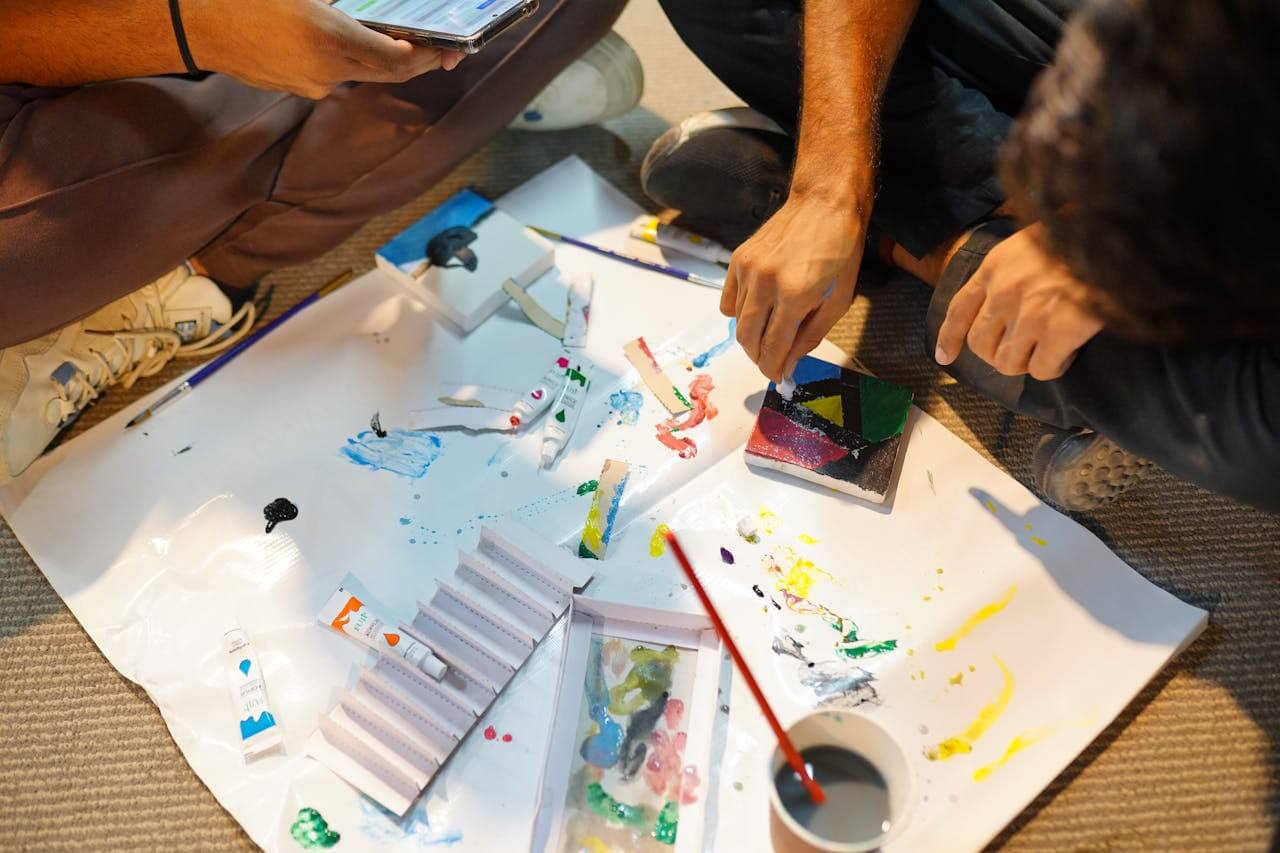
During a session, you might use paint, pencils, clay, collage materials, or mixed media to create images or visual representations of how you’re feeling. The artwork doesn’t need to look a certain way, and there’s no pressure to “get it right”. Sometimes a simple shape, colour choice, or abstract image can express far more than a carefully planned drawing.
Your therapist may gently encourage reflection by asking questions about the process itself. They might ask what stood out to you while creating, how certain colours or images feel emotionally, or what thoughts came up along the way.
This is one of the key differences between art therapy and an art class. An art class usually focuses on learning techniques or improving creative skills. Art therapy focuses on emotional exploration, self-awareness, and psychological support.
For many people, working creatively creates enough emotional distance to safely approach difficult feelings. Seeing an experience represented visually can make it feel more understandable and easier to talk about.
How art therapy supports mental health
Art therapy can support mental health in several interconnected ways. Creative expression engages emotional, sensory, and reflective parts of the brain at the same time, which may help you process experiences differently than conversation alone.
Emotional expression and self-awareness
Some emotions sit quietly in the background for a long time before they become fully conscious. You may notice tension, irritability, exhaustion, or sadness without really understanding where those feelings are coming from.
Creative work can help bring those emotions into clearer focus. While drawing, painting, or using collage, you may begin noticing patterns, themes, memories, or reactions that hadn’t felt obvious before.
For example, someone experiencing burnout might repeatedly use dark colours, crowded imagery, or themes of isolation in their artwork before fully recognising how emotionally overwhelmed they’ve been feeling.
Stress reduction and grounding
Creative activities often encourage slower breathing, focused attention, and a greater sense of presence. Repetitive movements, such as sketching, colouring, or shaping clay, can feel calming for the nervous system.
When your mind has been racing or overstimulated, the sensory nature of art materials may help you reconnect with the present moment. Many people describe feeling calmer, lighter, or mentally quieter after engaging in creative activities.
Trauma support
Trauma can affect the body, memory, emotions, and sense of safety. For some people, speaking directly about painful experiences can feel overwhelming or emotionally exposing.
Art therapy offers a more gradual and flexible way to approach difficult emotions. Instead of explaining every detail verbally, you might communicate feelings symbolically through colour, texture, imagery, or movement. A trauma-informed therapist will guide this process carefully and at a pace that feels manageable for you.
Rebuilding confidence and emotional connection
Mental health struggles can sometimes leave people feeling disconnected from themselves. Depression, anxiety, grief, and chronic stress may affect your motivation, sense of identity, confidence, and emotional energy over time.
Creative expression can gently reconnect you with curiosity, reflection, and self-trust. Even small moments of experimentation and self-expression can feel meaningful when you’ve been emotionally stuck or disconnected for a long period.
Who may benefit from art therapy?
Art therapy is used with children, teenagers, adults, and older people across many different settings, including schools, hospitals, trauma services, aged care programs, and private practice.
People seek art therapy for many different reasons. Some are managing long-term mental health concerns, while others are moving through periods of stress, grief, burnout, relationship difficulties, or major life change.
Concern or experience | How art therapy may help |
|---|---|
Anxiety | Supports grounding, emotional expression, and stress management |
Depression | Encourages reflection, emotional processing, and gentle engagement |
Trauma and PTSD | Provides non-verbal ways to explore difficult experiences |
Grief and loss | Creates space for memory, emotion, and meaning-making |
Childhood emotional difficulties | Helps children communicate through creativity and play |
Neurodivergence | Offers alternatives to conversation-based communication |
Chronic stress and burnout | Encourages emotional release and self-reflection |
Art therapy can also sit alongside other forms of support, including psychology, counselling, cognitive behavioural therapy, and mindfulness-based approaches.
What happens during an art therapy session?
Every therapist works a little differently, but most art therapy sessions include a mix of conversation, creative activity, and reflection.
A session might begin with a simple check-in about how you’ve been feeling recently or what’s been on your mind. Your therapist may offer a creative prompt, or you might choose to work more freely using available materials.
Some sessions involve painting or drawing, while others may focus on collage, clay work, visual journalling, or symbolic imagery. There’s no single “correct” way to participate.
After the creative process, you and your therapist may reflect together on what came up emotionally, physically, or mentally while creating. Sometimes the insights feel immediate. Other times, the process simply creates space to pause, observe, and become more aware of what you’re carrying emotionally.
It’s completely normal to feel hesitant before your first session, especially if you haven’t done anything creative in years. Many people worry they “aren’t artistic enough”, only to realise fairly quickly that artistic skill isn’t relevant to the therapeutic process.
Common art therapy activities
Art therapy activities vary depending on your goals, age, comfort level, and emotional needs.
Visual journalling: Visual journalling combines colour, imagery, writing, and symbolism to help you reflect on thoughts and emotions over time. Some people use it to track moods, process experiences, or express feelings they struggle to verbalise.
Emotion mapping: You may be invited to represent emotions using shapes, textures, colours, or movement rather than words. This can help externalise feelings that otherwise feel confusing or overwhelming internally.
Collage work: Collage activities often involve selecting images, words, and textures from magazines or printed materials to explore identity, relationships, memories, or future hopes.
Clay and sculpture: Working with clay can feel grounding and physically calming. The tactile nature of sculpting often helps people reconnect with their body and release emotional tension.
Art therapy for children and teenagers
Children and teenagers often express emotions differently from adults. Feelings may emerge through behaviour, creativity, imagination, or play long before they can be clearly explained in conversation.
Art therapy can give younger people a safer and more developmentally appropriate way to communicate emotions, experiences, and worries. It may also help build emotional vocabulary, coping skills, confidence, and self-awareness over time.
For teenagers, creative therapies can feel less intense than sitting face-to-face in direct conversation, especially during periods of emotional withdrawal, identity development, social pressure, or stress.
Is art therapy evidence-based?
Research into art therapy continues to grow across mental health, trauma recovery, chronic illness support, and community wellbeing settings.
Studies suggest creative therapies may help reduce psychological distress, support emotional regulation, improve quality of life, and increase emotional expression for some individuals. Outcomes vary depending on the person, the therapeutic relationship, and the type of support being provided.
Art therapy isn’t intended to replace every other form of mental health treatment. Instead, it can become a valuable part of broader emotional support and psychological care.
Art therapy in Australia
In Australia, creative arts therapists may be registered with the Australian, New Zealand and Asian Creative Arts Therapies Association, commonly known as ANZACATA. The organisation sets professional standards and registration requirements for practitioners across the region.
If you’re considering art therapy, it can help to ask potential therapists about their qualifications, experience, therapeutic approach, and whether they work with concerns similar to yours.
Access pathways can vary. Some people find art therapists through private practice, schools, hospitals, community mental health programs, or disability support services. Medicare rebates may depend on the practitioner and referral pathway, so it’s worth checking this before booking appointments.
Final thoughts
Art therapy creates space to explore emotions in ways that don’t rely entirely on conversation. Through colour, imagery, texture, and creativity, you may begin noticing thoughts and feelings that have felt difficult to access or explain.
For some people, art therapy becomes a gentle introduction to emotional expression. For others, it adds another layer of insight and support alongside existing therapy or mental health care.
If emotional challenges have started feeling difficult to carry alone, speaking with a qualified mental health professional can help you explore what kind of support feels most appropriate for your needs.


Essential Reading
Frequently Asked Questions
No. Artistic skill isn’t necessary. Art therapy focuses on expression and reflection rather than technical ability.
Art therapy may support anxiety by encouraging grounding, mindfulness, emotional expression, and nervous system regulation.
Yes. Art therapy is used with adults across private practice, hospitals, trauma services, and community mental health settings.
Sessions may involve pencils, paint, clay, collage materials, markers, photography, textiles, or mixed media approaches.
Yes. Some therapists offer online sessions using simple materials you already have at home.
Recommended Therapists Available Now
NSW
Psychologist
Hi, I'm a generally registered psychologist with around four years of experience working with children, adolescents and adults. I've worked in private practice through bo...More
VIC
Psychologist
Hi, I am Melissa, a trauma-informed psychologist with experience supporting individuals through mental health challenges, trauma, and managing neurodiversity. My approach...More
NSW
Psychologist
I'm Carola, a Registered Psychologist passionate about creating a safe, supportive and non-judgemental space where young people and adults feel heard, understood and acce...More



Talked acknowledges the Traditional Owners of the lands on which we operate and pays respect to Elders past, present, and emerging.
We welcome and respect people of all backgrounds, genders, sexualities, abilities, and cultures.
Telehealth Services
Are you a Psychologist? Join our team
If you are in crisis or experiencing suicidal or homicidal thoughts, please contact 000 or access these resources for emergency assistance.



Get the Talked App