
Understanding the Transport Accident Commission's mental health services

In a Nutshell
If you’ve been injured in a transport accident in Victoria, the Transport Accident Commission (TAC) can fund a range of mental health services as part of your recovery.
Support may include counselling, psychological therapy, psychiatry, and coordinated care tailored to your needs.
Early access to mental health support is encouraged and linked to better recovery outcomes.
After a transport accident, the focus often lands on physical injuries, medical appointments, and rehabilitation plans. Yet, many people notice that the emotional impact can be just as significant, sometimes emerging gradually in the weeks or months that follow.
You might find your sleep is disrupted, your confidence in travelling has shifted, or your mood feels harder to manage. These responses are not uncommon after trauma, and they deserve attention and care.
In Victoria, the Transport Accident Commission (TAC) recognises that recovery involves both body and mind. Its mental health and wellbeing services are designed to support you through this process, offering structured, evidence-based care that adapts as your needs change.
This guide walks you through how TAC mental health services work, what support is available, and how you can access care that fits your situation.
What are TAC mental health services?
If your TAC claim is accepted, you may be eligible for funded mental health treatment as part of your recovery plan. According to the TAC, these services are intended to support your psychological wellbeing following a transport accident and are delivered by qualified, approved providers.
Rather than offering a one-size-fits-all model, the TAC supports a range of services that can be tailored to your circumstances. Your care is typically guided by clinical assessment and may evolve over time, depending on how you’re feeling and functioning.
This approach reflects a broader understanding of recovery, one that considers your mental health, physical condition, and social environment together.
The psychological impact of transport accidents
How trauma might affect you
A transport accident can be a sudden and distressing experience. Even after the immediate danger has passed, your mind may continue to process what happened.
You might notice recurring thoughts or memories of the accident, feeling tense or on edge, changes in mood such as irritability or sadness, and difficulty concentrating or sleeping.
For some people, these reactions settle with time. For others, they can develop into conditions such as anxiety, depression, or post-traumatic stress disorder (PTSD).
Taking a whole-person approach
The TAC uses what is known as a biopsychosocial model. In practical terms, this means your care considers your emotional wellbeing, your relationships and support systems, and your ability to manage daily activities.
This kind of approach recognises that recovery is shaped by more than symptoms alone. It’s about helping you rebuild stability and confidence in different areas of your life.
For many people, support through this period involves learning new ways to respond to stress, reconnect with others, and gradually return to meaningful activities.
Related: Benefits of seeing a psychologist
Types of mental health services funded by TAC
Psychological therapy
Psychological therapy is one of the most commonly accessed TAC-funded services. If you’re referred to a psychologist, you’ll work together using evidence-based approaches such as cognitive behavioural therapy or trauma-focused therapy.
These sessions are designed to help you understand your reactions, develop coping strategies, and process the experience of the accident in a safe and structured way.
Psychiatric care
If your symptoms are more complex or persistent, your care team may recommend a psychiatrist. Psychiatrists are medical specialists who can assess mental health conditions, prescribe medication if needed, and provide ongoing clinical support.
This level of care is often helpful when symptoms significantly affect your day-to-day functioning.
Counselling
Some people benefit from counselling soon after an accident. Early sessions can give you space to talk through what happened, explore your emotional responses, and receive guidance on managing distress.
The TAC supports early intervention, as research shows that timely psychological care can reduce the likelihood of longer-term mental health difficulties.
Social work and coordinated care
Recovery can involve practical challenges alongside emotional ones. You might be managing changes in work, family responsibilities, or daily routines.
Social workers and TAC case managers can help coordinate your care, connect you with services, and support you in navigating these changes. This coordinated approach aims to reduce stress and keep your care aligned.
Ongoing support
Recovery is rarely straightforward. There may be periods where things feel more manageable, followed by times when additional support is needed.
The TAC allows for flexibility in your care, which may include extending sessions or introducing different types of support as required.
Related: Psychologists vs psychiatrists
Using TAC benefits for telehealth psychology
If you have an approved TAC claim, you may be able to access psychology sessions via telehealth, depending on your clinical needs and your provider’s recommendation. The TAC allows services to be delivered by video or phone when it supports your recovery or improves access to care.
Telehealth can be a practical option if travel is difficult, you live in a regional area, or you prefer the comfort of attending sessions from home. Sessions are similar to in-person appointments, with structured conversations, evidence-based strategies, and regular progress reviews delivered through a secure platform.
Accessing support through Talked
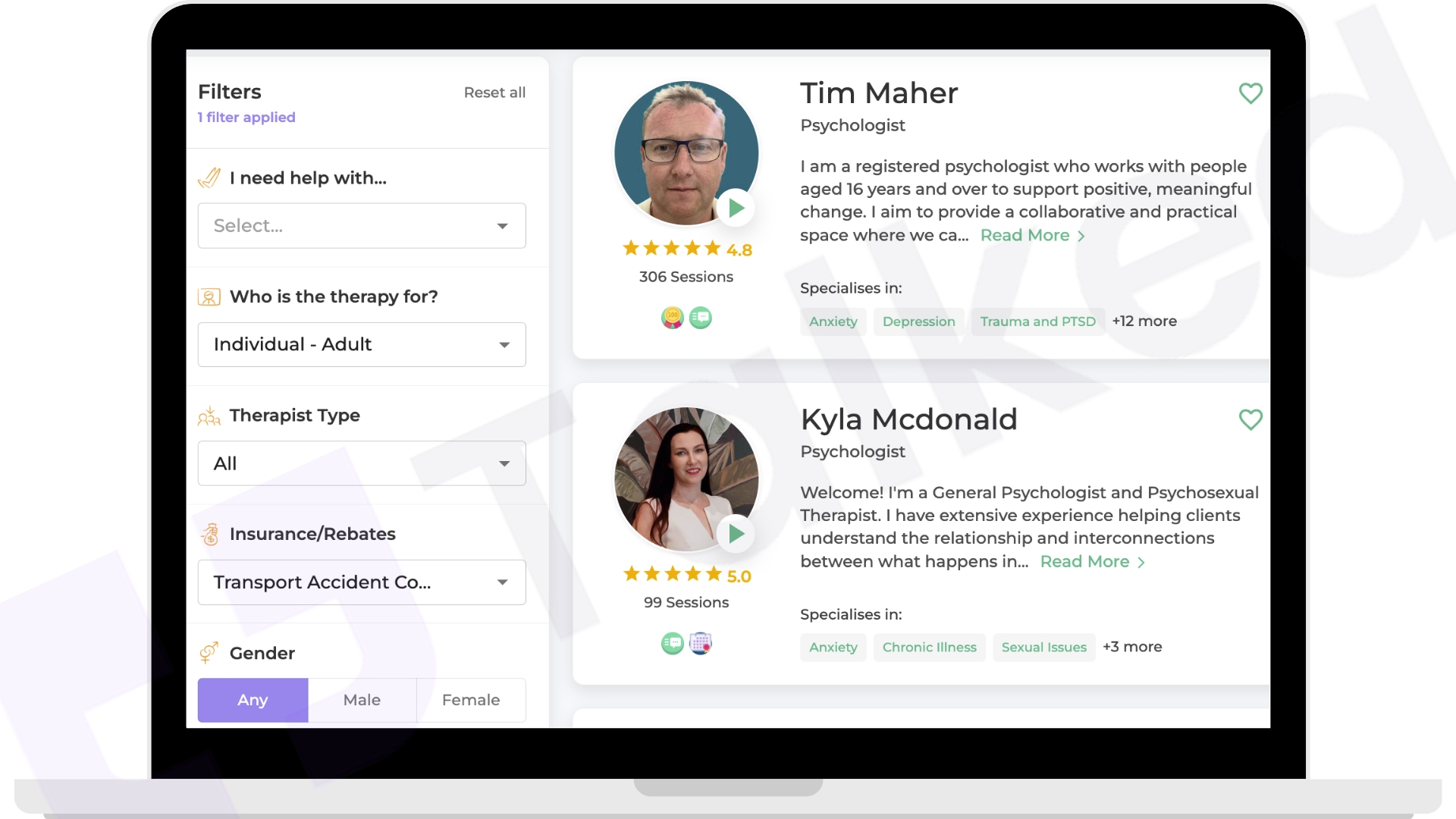
If you’re considering telehealth, Talked offers a simple way to connect with registered psychologists online. For those with TAC approval, it can support consistent access to care without the added strain of travel.
Using a platform like Talked allows you to attend sessions from home, book times that suit your schedule, and maintain continuity with your psychologist. This can be particularly helpful when you’re managing recovery alongside other commitments or experiencing fatigue.
Telehealth therapy, when supported by TAC funding, provides a flexible and clinically appropriate way to stay engaged with your mental health care.
Find recognised psychologists here
Final thoughts
The Transport Accident Commission’s mental health services are designed to support you through the psychological effects of a transport accident, alongside your physical recovery. The care you receive is structured, flexible, and grounded in evidence, with a focus on helping you move forward at a pace that feels manageable.
If you’re finding that emotional or psychological difficulties are affecting your daily life after an accident, it may be helpful to speak with a qualified therapist or healthcare professional. They can help you understand your options and connect you with appropriate support.



Essential Reading
Recommended Therapists Available Now
VIC
Psychologist
Hello, Im Rachna, a Registered Psychologist with extensive experience providing psychological services across vocational, NDIS and community settings. I have worked with ...More
VIC
Clinical Psychologist
I am Adriana, a clinical psychologist with extensive experience working with diverse clients. I offer both brief, solution focused support through eligible Employee Assis...More
QLD
Psychologist
I am a psychologist with general registration, who houses an array of life and professional experience in counselling and psychology across the lifespan. I am a massive e...More



Talked acknowledges the Traditional Owners of the lands on which we operate and pays respect to Elders past, present, and emerging.
We welcome and respect people of all backgrounds, genders, sexualities, abilities, and cultures.
Telehealth Services
Are you a Psychologist? Join our team
If you are in crisis or experiencing suicidal or homicidal thoughts, please contact 000 or access these resources for emergency assistance.



Get the Talked App