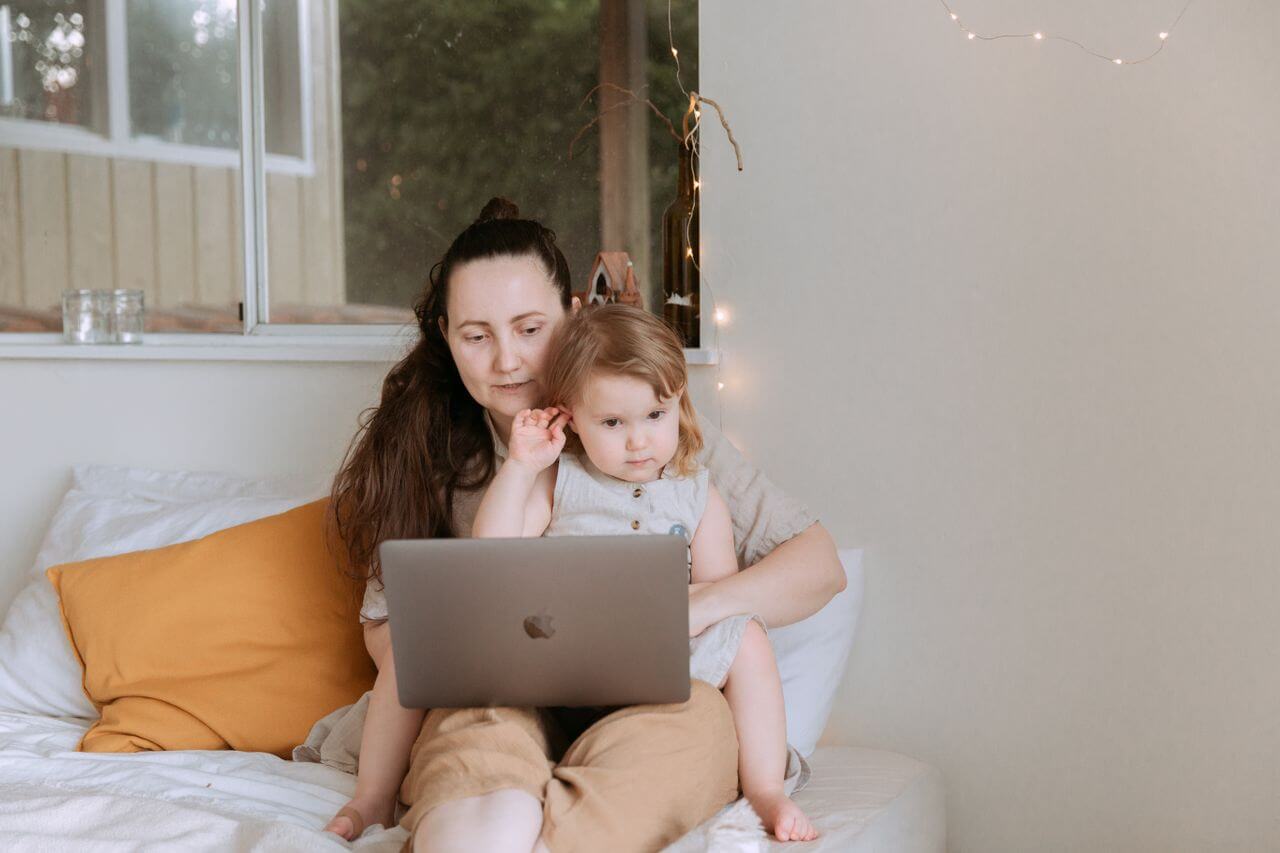
Coping with loneliness as a parent

In a Nutshell
Feeling lonely as a parent can be painful and confusing. It can happen even when you love your children deeply and have a support system around you.
Loneliness often grows from a mix of things, such as exhaustion, changing friendships, financial stress, relationship strain, guilt, or feeling as though parts of your old identity have faded into the background.
You don’t have to overhaul your whole life to feel more connected or less lonely. Small moments of joy, regular contact with trusted people, and practical support can help ease the sense of isolation over time.
Parenthood can fill your days with contact while leaving very little space for genuine connection.
You may spend hours feeding, settling, driving, organising, listening, comforting, or playing, yet still reach the end of the day feeling unseen. Friends may be harder to reach. Getting out can take more effort than it used to, and conversations with a partner may revolve around logistics. If you’re parenting without much practical or emotional support, there may be no obvious person to turn to when you’re struggling.
Feeling lonely in these circumstances doesn’t say anything negative about the way you feel about your children. You can be grateful for your family and still miss being understood, supported, or known outside your role as a parent.
For parents, loneliness often develops gradually. It may begin with fewer social plans, more time at home, or a sense that your old life has moved further away. Understanding where the feeling is coming from can help you respond to it with more care and less self-criticism.
What parental loneliness can feel like
Loneliness and social isolation are related, but they aren’t the same. Social isolation usually refers to having limited contact with other people. Loneliness describes the distress that can arise when the relationships you have don’t provide the closeness, understanding, or companionship you need.
That’s why you can feel lonely in a busy house, in a relationship, or while surrounded by children.
Perhaps your days are full of conversation, but very little of it centres on how you’re feeling. Perhaps you miss talking to someone who knows you beyond routines, school pick-ups, feeding schedules, and household responsibilities. You may notice yourself feeling unusually emotional when someone asks how you are, or feeling flat after seeing friends spend time together without you.
Loneliness can also show up as a sense that you’ve disappeared into the role of “parent”. Parts of your life that once gave you confidence, stimulation, identity, or friendship may now be difficult to access.
If that feeling sounds familiar, it may be a sign that you need more room for connection, not that you’re doing anything wrong.
Why parenthood can feel so isolating
Loneliness usually has more than one cause. Parenting can change your friendships, finances, sleep, identity, work, relationship, and daily routine at the same time. When several of those pressures overlap, social connection can become harder to maintain.
Friendships can shift
Friendships often change after children arrive, even when nobody intends for them to.
Spontaneous dinners, weekends away, long phone calls, and last-minute plans may no longer fit around naps, feeding, childcare, illness, school routines, or exhaustion. You may turn down invitations because getting there feels too difficult, then notice that the invitations slowly become less frequent.
Friends without children may still care about you, but your schedules and priorities can become harder to match. At the same time, becoming friends with other parents isn’t automatic. Shared experience can help, but personalities, values, routines, and circumstances still matter.
This can leave you in an uncomfortable in-between stage. Old friendships feel different, while newer connections haven’t yet developed enough depth to feel supportive.
You can still feel lonely in a relationship
Living with a partner doesn’t guarantee emotional closeness.
Once parenting becomes demanding, conversations can quickly become practical: who is getting up for nappy change, when to do groceries, who will pay what, who is doing pick-up, what needs to go in the lunchbox, and so many other to-do’s. When both of you are tired, meaningful conversation can be pushed aside again and again.
If the workload feels uneven, loneliness may also sit alongside resentment. Financial pressure, reduced intimacy, sleep deprivation, and disagreements about parenting can create even more distance.
You may find this especially confusing if, from the outside, your life appears full of companionship. But emotional loneliness depends on feeling understood and connected, not simply sharing space with someone.
Financial stress can narrow your world
A lot of social advice assumes you can afford to go out regularly. For many parents, that simply isn’t realistic.
Meals out, children’s activities, babysitters, petrol, parking, public transport, and even a casual coffee can add up. According to the Australian Bureau of Statistics, around one in four Australian households experienced at least one cash flow problem in the 12 months covered by the 2025 General Social Survey.
When money is tight, it can become easier to decline plans than to explain that you can’t afford them. If friends appear to have more financial freedom, you may also feel embarrassed or out of step with them.
Connection doesn’t have to cost much, though. A walk, a playground visit, a library session, a cup of tea at home, or a phone call can still give you some adult contact and companionship. What matters most is whether the interaction leaves you feeling a little more connected.
Guilt can make it harder to open up
Parenting creates plenty of opportunities to judge yourself. You might feel guilty for losing patience, relying on screens, wanting time alone, feeling bored by play, serving an easy dinner, or missing aspects of your pre-parent life. If you assume other parents are coping better, you may start hiding the harder parts of your experience.
That can become isolating very quickly.
Social media can intensify this if you’re comparing one of your hardest days with somebody else’s carefully selected moments. Other parents may appear more patient, organised, connected, or financially comfortable than you feel.
It can help to share a little more honestly with someone you trust. You don’t have to disclose everything. Even saying, “I’ve been finding the days quite isolating lately,” can open the door to a more genuine conversation.
You may miss parts of who you were
Parenthood can change your identity in ways you didn’t expect.
Work may look different. Hobbies may have disappeared from your routine. Friendships may feel less accessible. Time alone may be rare. You may be so focused on everybody else’s needs that it becomes hard to remember what used to make you feel energised or like yourself.
Missing those parts of your life doesn’t mean you regret becoming a parent. It’s possible to love your family while also grieving freedom, independence, career momentum, friendships, or activities that once mattered to you.
Reconnecting with even one small part of your earlier identity can be grounding. You may not have hours to spare, but ten or fifteen minutes spent reading, drawing, exercising, gardening, gaming, or listening to music can remind you that you’re still a whole person outside your responsibilities.
Loneliness during the postnatal period
For mums, the months after having a baby can be especially isolating. Your days may become more repetitive, sleep may be fragmented, your body may still be recovering, and leaving the house can require far more planning than before.
If you’re also dealing with feeding difficulties, anxiety, birth recovery, relationship strain, or a baby who rarely settles, loneliness can become more intense.
For some parents, persistent loneliness sits alongside postnatal depression or anxiety.
Healthdirect reports that postnatal depression affects about one in seven women in the first year after having a baby, while up to one in ten fathers experience depression around this time. PANDA also reports that one in five expecting or new mothers and one in ten expecting or new fathers experience symptoms of perinatal anxiety and/or depression.
Postnatal depression can include persistent low mood, numbness, hopelessness, loss of interest or pleasure, difficulty concentrating, withdrawal from others, and difficulty managing everyday activities. Thoughts of harming yourself or your baby require urgent professional support.
It can be easy to dismiss emotional distress as “just tiredness” when you have a new baby. If sadness, anxiety, hopelessness, or disconnection keeps showing up or is interfering with daily life, speak with a GP, maternal and child health nurse, midwife, psychologist, or another qualified health professional.
How to cope with loneliness when your energy is low?
When you’re already exhausted, advice to “get out more” can feel impossible to use. Loneliness often comes with the very things that make socialising harder, including low energy, limited childcare, anxiety, financial pressure, and a lack of people to call.
It may help to lower the bar.
Start with repeatable contact
Close relationships often grow from small interactions that happen regularly.
You could visit the same playground at a similar time each week, attend a recurring library session, stay for a few minutes after school pick-up, or go for a walk along the same route. Familiarity can make conversation feel easier because you don’t have to start from zero each time.
Choose one person and be a little more honest
If you’re feeling isolated, trying to build a whole social network can feel overwhelming. One person is a more manageable place to start.
Think of someone who has been kind, reliable, or easy to talk to in the past. Instead of waiting until you feel more upbeat, try telling them what’s actually been happening.
You could say, “I’ve been feeling pretty isolated lately. Do you have time for a call this week?”
That kind of message can feel vulnerable, but it gives the other person something concrete to respond to. People may care about you without realising how lonely you’ve become.
Ask for specific help
Broad offers of support can be surprisingly hard to accept. If someone says, “Let me know if you need anything,” you’re still left with the task of deciding what to ask for.
Specific requests are often easier for both people.
You could ask someone to sit with the baby while you shower, meet you for a walk, bring over a simple meal, call after bedtime, or help with school pick-up. Practical support can reduce loneliness because it gives you some breathing room and reminds you that you don’t have to carry every task by yourself.
Make room for something that’s yours
It’s easy to feel as though personal interests should come after everything else. In practice, losing every part of your own routine can deepen the sense that your identity has narrowed.
Try returning to something that belongs to you, even briefly. That could be reading, exercise, music, gardening, gaming, cooking, art, study, or anything else that once felt meaningful.
The activity doesn’t need to be productive. It only needs to reconnect you with a part of yourself that isn’t defined by parenting.
Pay attention to how online spaces affect you
Online communities can be valuable, particularly if you’re housebound, geographically isolated, awake during night feeds, or unable to attend in-person activities.
Some online spaces can also leave you feeling worse.
Notice how you feel after spending time in a particular group or feed. If you usually leave feeling inadequate, resentful, or more disconnected, it may be worth muting certain accounts, changing who you follow, or spending less time there.
Look for communities where people speak honestly about parenting rather than presenting a polished version of it.
Related: Depleted mother syndrome
What if you don’t have a support network?
Some parents genuinely have very few people to turn to.
You may live far from family, be separated from a partner, have strained relationships, be new to an area, or have lost important relationships through bereavement or other life changes. In those circumstances, being told to “reach out to friends and family” can feel frustrating rather than helpful.
Structured forms of support may be a better starting point.
A GP, therapist, community centre, parenting service, parents’ group, or moderated support group can give you somewhere to begin without requiring an existing personal relationship. Repeated contact can also create familiarity over time.
You don’t need to find a best friend immediately. Sometimes the first improvement is simply having somewhere you can go, a few familiar faces, or a person who remembers your name.
When therapy may help
You don’t need a diagnosis or a crisis to speak with a therapist about loneliness.
Therapy may be useful if loneliness has become persistent, you’re withdrawing more often, or you’re also dealing with sadness, anxiety, anger, guilt, numbness, relationship strain, or low confidence as a parent.
A therapist can help you look at what’s contributing to the isolation, including painful beliefs about yourself, changes in identity, difficulties asking for support, or patterns in relationships that leave you feeling disconnected.
For many parents, therapy also provides something that can be hard to find elsewhere: regular time to talk about your own inner life without having to take care of the other person in the room.
If you’re having thoughts of harming yourself or your baby, or anyone is in immediate danger, call Triple Zero (000) in Australia. Lifeline provides crisis support on 13 11 14. Parents experiencing perinatal mental health concerns can also contact PANDA.
Related: Benefits of consistent therapy
Final thoughts
Loneliness can be part of parenthood even when your home is full and your children are deeply loved.
You may be dealing with changed friendships, less freedom, financial pressure, relationship strain, or the sense that much of your old identity has been pushed aside. If that has left you feeling disconnected, try not to expect yourself to solve it all at once.
A useful starting point may be one honest conversation, one familiar place you return to each week, or one small part of your routine that reconnects you with yourself.
If loneliness has become persistent or is tied to depression, anxiety, guilt, relationship difficulties, or the pressures of new parenthood, speaking with a therapist can give you space to understand what’s happening and what kind of support would fit your life.
Get Support
Get parenting help and book a free video consultation with one of our therapists

Essential Reading about Parenting
Parenting Therapists Available Now
NSW
Clinical Psychologist
I'm a registered psychologist with over 14 years of experience supporting children, parents, and adults to navigate life's challenges with greater confidence and ease. My...More



Talked acknowledges the Traditional Owners of the lands on which we operate and pays respect to Elders past, present, and emerging.
We welcome and respect people of all backgrounds, genders, sexualities, abilities, and cultures.
Telehealth Services
Are you a Psychologist? Join our team
If you are in crisis or experiencing suicidal or homicidal thoughts, please contact 000 or access these resources for emergency assistance.




Get the Talked App