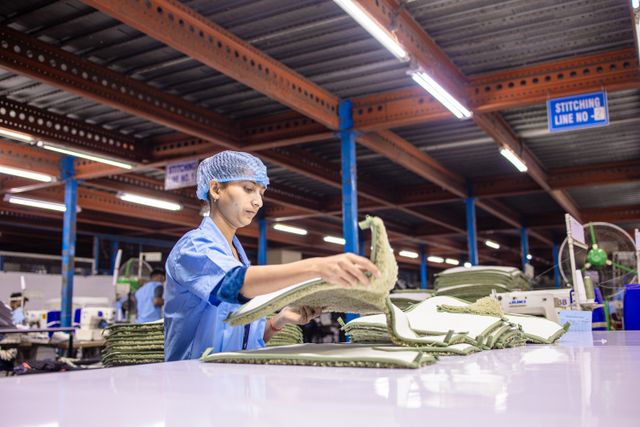
Managing psychosocial hazards in manufacturing sites

In a Nutshell
Psychosocial hazards in manufacturing often stem from excessive workloads, shift patterns, low job control, poor support, unclear roles, conflict, harmful behaviour, and poorly managed change.
A strong psychosocial risk assessment looks at how work actually happens on the floor, including the frequency, duration, and severity of exposure to hazards.
Your employees should be involved in identifying problems and shaping controls, because they see pressures and workarounds that may not be visible from management reports.
An Employee Assistance Program (EAP) can give workers confidential access to psychological support, but it should sit alongside workplace controls that address the source of risk.
Manufacturing managers already spend a great deal of time managing risk. You think about machine guarding, hazardous substances, manual handling, moving vehicles, noise, maintenance schedules, and safe operating procedures.
Psychosocial hazards deserve the same disciplined attention.
They may be less visible than an unguarded machine, but they can still affect employees’ health, safety, attendance, turnover, and day-to-day performance. A production team that is routinely short-staffed, a maintenance worker repeatedly called in after hours, or an apprentice who is regularly humiliated by more experienced workers may all be exposed to conditions that increase the risk of psychological harm.
Why psychosocial safety deserves your attention
Manufacturing remains one of Australia's higher-risk industries for workplace injury.
Safe Work Australia's Key Work Health and Safety Statistics Australia 2025 reported 14,800 serious workers' compensation claims in manufacturing in 2023–24p, accounting for 10.1% of all serious claims. Manufacturing also recorded 9.4 serious claims per million hours worked, compared with an all-industry average of 6.8.
Mental health condition claims have also risen substantially across Australian workplaces. Safe Work Australia recorded 17,600 serious claims for mental health conditions in 2023-24p, up 161.1% over the previous decade.
The time away from work can also be substantial. For 2022-23 serious claims, the median time lost from work due to mental health conditions was 35.7 working weeks, compared with 7.4 weeks across all serious claims.
Those figures matter operationally. When a worker is absent for an extended period, other employees may take on overtime, supervisors may spend more time managing coverage, and production pressure can increase across the team. If several psychosocial hazards are already present, that additional pressure can compound the problem.
Psychological safety also intersects with physical safety. A fatigued operator rushing to recover lost production after a breakdown may be dealing with high job demands, noise, time pressure, and reduced concentration at the same time.
Common psychosocial hazards in manufacturing workplaces
Safe Work Australia identifies a range of psychosocial hazards, including high job demands, low job control, poor support, lack of role clarity, poor organisational change management, inadequate reward and recognition, poor organisational justice, traumatic events, remote or isolated work, poor physical environments, violence and aggression, bullying, harassment, and poor workplace relationships.
In manufacturing, several of these hazards can become particularly pronounced.
Psychosocial hazard | How it may show up on your site | Practical controls to consider |
|---|---|---|
High job demands | Unrealistic output targets, regular overtime, understaffing, rushed changeovers, or insufficient recovery time | Review staffing, workload, targets, break arrangements, and scheduling |
Low job control | Workers have little influence over task sequencing, pace, breaks, or escalation decisions | Give employees appropriate input into processes, workflow, and continuous improvement |
Poor support | Supervisors are hard to access, new starters lack guidance, or night-shift teams have little management contact | Improve supervisor availability, mentoring, escalation pathways, and shift coverage |
Poor role clarity | Workers receive conflicting instructions, or responsibilities become unclear during changeovers | Define responsibilities, decision-making authority, and escalation processes |
Poor change management | Automation, restructures, roster changes, or redundancies are introduced with limited consultation | Consult early, explain the reasons for change, and give workers useful information before implementation |
Poor physical environment | Excessive heat, noise, poor amenities, cramped spaces, or uncomfortable PPE | Improve the physical environment, maintenance, amenities, and work design |
Remote or isolated work | Maintenance workers, cleaners, or night-shift staff work alone for long periods | Use check-ins, communication systems, appropriate staffing, and emergency support |
Bullying, harassment, or conflict | Intimidation, humiliating initiation practices, aggressive supervision, or sexual harassment | Set clear behavioural standards, create safe reporting options and respond promptly |
Poor organisational justice | Workers see promotions, overtime, discipline, or shift allocation as inconsistent or unfair | Make decision-making processes transparent, consistent, and explainable |
You should also pay close attention to fatigue and shift design. Fatigue can interact with high job demands, long hours, poor recovery and low control over rosters, which may increase both psychological and physical safety risks.
Learn more about Employee Wellbeing Support for Manufacturing Companies
High job demands and production pressure
Every manufacturing site has deadlines, targets, and periods of peak demand. But the risk grows when excessive pressure becomes the norm.
You may see workers skipping breaks, staying back frequently, accepting repeated call-outs, or taking on additional tasks because the staffing does not match the workload. Production problems can then intensify that pressure. So when you assess production pressure, look at the full work environment rather than reviewing workload figures on their own.
Low job control
Some manufacturing tasks need strict procedures and limited variation, particularly where safety, quality, or process consistency are critical.
Even so, you can often give workers meaningful input into how work is organised.
Operators may have valuable suggestions about break timing, changeovers, line speed, maintenance windows, ergonomic issues, and workflow bottlenecks. Their day-to-day experience may reveal inefficiencies that are not obvious from performance reports.
Good work design includes the people who perform the work. If you invite workers to suggest practical improvements and act on strong ideas, you may reduce psychosocial risk while improving operational efficiency.
Poor support and unclear supervision
Frontline supervisors have a major influence on psychosocial safety. They are also often under significant pressure themselves.
A supervisor may be responsible for production, quality, safety, absence management, employee conflict, maintenance escalation, and reporting, all within the same shift.
If that workload becomes excessive, workers may receive rushed instructions, inconsistent feedback or little support when problems arise. You may notice signs such as:
employees being unsure who has authority to make decisions
night-shift teams having limited access to management
inexperienced workers being left without sufficient guidance
different supervisors giving conflicting instructions
team leaders becoming increasingly reactive under pressure
Training can improve supervisory skills, but it will not solve a structure that leaves supervisors with more responsibility than they can realistically manage.
Bullying, harassment, and harmful workplace behaviour
Manufacturing workplaces often bring together permanent employees, labour-hire workers, contractors, apprentices, and people from a wide range of cultural and language backgrounds.
That mix can work very well, but managers need to pay attention to any behaviour that is treated as normal simply because it has been part of the workplace for a long time. Aggressive banter, humiliating initiation practices, intimidation, sexual harassment, or repeated public criticism can create serious psychosocial risks as well as wellbeing and legal issues.
A policy alone will not fix these behaviours. Your workers need to know how to raise concerns, who will respond, and what will happen next. They also need confidence that speaking up will not affect their roster, overtime opportunities, promotion prospects, or standing within the team.
Doing psychosocial risk assessment the right way
A useful psychosocial risk assessment should reflect the way work actually happens.
Safe Work Australia sets out the usual risk management process: identify hazards, assess risks where needed, control the risks, and review the effectiveness of those controls.
For psychosocial hazards, you should also consider how often workers are exposed, how long the exposure lasts, how severe it is, and how different hazards may combine.
Step 1: Break your workforce into meaningful groups
A single site-wide score can hide important differences between teams. You may get more useful information by looking separately at:
day and night shifts
production operators
maintenance workers
warehouse and logistics teams
quality personnel
apprentices
team leaders and supervisors
contractors and labour-hire employees.
Different groups may face very different pressures. For example, your night-shift maintenance workers may have a high level of autonomy but limited access to support. Production operators may have strong peer relationships but very little control over work pace. Supervisors may carry pressures that are not visible to their teams.
Looking at workgroups separately helps you choose controls that match the actual risk.
Step 2: Use more than one source of information
Avoid relying on incident reports alone. Many psychosocial hazards develop long before anyone makes a formal complaint or lodges a workers' compensation claim. You can build a clearer picture by reviewing:
employee consultation feedback
HSR input
anonymous survey results
overtime patterns
absenteeism
staff turnover
exit interview themes
grievances and complaints
incident reports
maintenance backlogs
recurring staffing shortages
unplanned call-outs
production bottlenecks.
Operational data often reveals patterns that wellbeing surveys miss. For example, a team may report moderate stress levels in a survey, while overtime records show that several employees have worked repeated extended shifts for months. Looking at both sources gives you a more complete view.
Step 3: Ask your employees what is making the job harder
Worker participation is a core part of psychosocial risk assessment and management. Under the model WHS framework, PCBUs must consult workers who are, or are likely to be, directly affected by health and safety matters. Consultation is required when hazards are identified, risks are assessed, and decisions are made about controls.
Good consultation gives workers relevant information, a genuine opportunity to share their views and evidence that their feedback has been considered. On a manufacturing site, you could use a mix of:
toolbox discussions
small-group workshops
HSR meetings
anonymous surveys
one-to-one conversations
shift-specific feedback sessions.
Don’t limit consultation to day-shift or to the employees who are most comfortable speaking in front of managers. If you have workers with different language or literacy needs, adjust the format so they can participate properly.
Step 4: Look at hazards in combination
Psychosocial hazards rarely occur one at a time. Consider an operator who regularly works overtime, has little control over their pace, works in a noisy environment and receives conflicting instructions from different supervisors.
Each issue carries some level of risk. Together, they may create a much greater exposure.
Your assessment should therefore consider the overall work situation. It’s important to ask questions, such as:
Which hazards occur together?
How long are workers exposed?
Do the same employees face multiple pressures?
Are there particular shifts or departments where risks cluster?
What happens during breakdowns, shutdowns or peak production periods?
This gives you a much more useful picture than assigning each hazard a separate score and reviewing it in isolation.
Step 5: Build controls around the cause of the problem
Once you have identified a psychosocial risk, look first at the conditions creating it.
If excessive job demands are linked to chronic understaffing, the control should address staffing, scheduling, or workload.
If workers lack role clarity, review responsibilities and escalation procedures. If a supervisor's behaviour is contributing to harm, coaching may form part of the response, but you may also need performance management, closer oversight, or changes to reporting structures.
Practical controls may include:
increasing staffing during predictable peak periods
reviewing production targets
changing roster or overtime arrangements
redesigning jobs
improving break arrangements
increasing supervisor coverage
clarifying responsibilities
improving change communication
addressing poor physical conditions
strengthening reporting and complaint processes
improving workload planning.
Give each action an owner, a timeframe and a method for checking progress. A control that sits in a risk register without ownership is unlikely to achieve much.
Keep the focus on work design, not just individual coping
Mental health education, stress-management training, and wellbeing resources can be useful additions to your safety strategy. But they should not carry the main burden of controlling risks created by work design.
An employee cannot solve chronic understaffing through breathing exercises. They cannot personally correct an unfair rostering process or change a manager's aggressive behaviour.
When you identify a psychosocial hazard, ask yourself: What can I change in the way this work is designed, organised or managed? That question keeps attention on the part of the risk that the organisation can influence directly.
Individual support still has an important place, particularly when workers are dealing with stress, conflict, personal difficulties, or the effects of a distressing event.
Where an EAP fits into your psychosocial safety strategy
An Employee Assistance Program gives workers another confidential route to professional support. Your employees may use an EAP when they are dealing with workplace conflict, stress, a critical incident, relationship difficulties, grief, family pressures or other concerns affecting their mental health.
For manufacturing workplaces, EAP accessibility is one of the common issues, and this deeply matters.
People working rotating shifts or nights may find traditional office-hour services difficult to use. Your workforce may also include people who prefer phone or online counselling rather than arranging an in-person appointment.
Talked's EAP provides access to psychologists and counsellors, including 24/7 counselling options, same-day appointments, wellbeing resources, and critical incident support. Used well, an EAP can sit alongside your broader psychosocial risk controls and give workers a private way to speak with a qualified professional.
Keep the boundaries clear, though. If several employees are seeking counselling because workload or management practices are creating sustained pressure, you still need to investigate and address those workplace conditions.
An EAP supports the person. Your risk management process needs to address the hazard.
You should also protect confidentiality. If you receive EAP utilisation reports, focus on de-identified trends rather than information that could reveal who has accessed support.
Use our ROI calculator to see how much your organisation can save by supporting your team with Talked's PAYG EAP.
Practical steps you can take now
You don’t need to overhaul your entire psychosocial risk management system in one project.
Start with one team, department, or shift where pressure appears highest.
Speak with employees and HSRs. Review overtime, staffing, complaints, absence and turnover. Look closely at what happens during breakdowns, shutdowns, staff shortages, and peak production periods. Then select a small number of controls that address the strongest risks. For example, you might:
adjust staffing on one high-pressure shift
introduce a clearer escalation process during breakdowns
give supervisors more support and manageable spans of control
review repeated overtime
consult employees before changing rosters
introduce better support for isolated workers
strengthen pathways for reporting inappropriate behaviour.
Monitor the outcome and refine the controls as needed.
You can also integrate psychosocial risk management into processes you already use, including toolbox talks, incident reviews, risk registers, change-management procedures, production planning, and continuous improvement. That approach helps psychosocial safety become part of normal operations rather than a separate wellbeing initiative that competes for attention.
Final thoughts
Psychosocial hazards belong within your core safety responsibilities.
If you manage a manufacturing site, you are in a strong position to influence many of the factors that shape psychological health at work, including workload, staffing, supervision, role clarity, consultation, workplace behaviour, and change management.
Your employees are one of your best sources of information. They know where production demands become difficult to sustain, where procedures clash with reality, and where small pressures accumulate across a shift. Use that insight alongside operational data and a structured risk assessment. Then, focus your mitigation plan on the conditions creating the risk.
Professional mental health support also has an important role alongside those controls. An EAP such as Talked gives workers a confidential option for speaking with a psychologist or counsellor when work or personal pressures are affecting them.
Managers may also find value in speaking with a therapist, particularly when leadership pressure, conflict, difficult workplace events, or responsibility for large teams begins to weigh heavily.
Strong psychosocial safety comes from improving the way work is designed and managed while giving people straightforward access to support when they need it.



Essential Reading
Why pay for unused EAP sessions?



Talked acknowledges the Traditional Owners of the lands on which we operate and pays respect to Elders past, present, and emerging.
We welcome and respect people of all backgrounds, genders, sexualities, abilities, and cultures.
Telehealth Services
Are you a Psychologist? Join our team
If you are in crisis or experiencing suicidal or homicidal thoughts, please contact 000 or access these resources for emergency assistance.



Get the Talked App