Mental health support that works your hours
Give your hospitality crew fast, confidential access to real Australian psychologists and counsellors by phone, video or message, fitted around service and rosters.
Make an Enquiry
We work with hospitality venues







The energy out front hides what the trade asks of your people.
Australian chefs die by suicide at almost four times the rate of workers in non-hospitality jobs
hospitality workers died by suicide in Australia between 2006 and 2017, with chefs among the hardest hit
of hospitality workers drink alcohol at risky levels, almost one in three
The pressure your venue carries after close
Hospitality is high-pressure, high-turnover and easy to suffer through in silence. The late finishes, the heat of service and the thin job security all add up. Giving your team an easy, private way to talk changes how they cope, and how long they stay.
Accommodation and food services has the highest rate of past-year illicit drug use of any Australian industry, at 27.6% of workers.
58% of hospitality workers are casual, the highest casual rate of any industry and well above the national average of 19%, so job security is thin.
Median weekly earnings in hospitality are $1,300, well below the all-industries median of $1,741, making it one of Australia's lowest-paid sectors.
Support that fits a hospitality roster
Service does not finish at five, so neither do we. Your team can reach a qualified Australian counsellor any hour of the day or night, by phone, video or message, straight from the Talked app.
There is no waitlist and no clinic to visit. Whether someone closes a late bar, works a double in the kitchen or picks up casual shifts across venues, support fits around when they actually have time.
Talk to an expert
Care for the pressures that come with the trade
The long hours, the heat of a busy service and the pace behind the pass take a real toll, and so do money worries when the work is casual and the pay sits low. Talked supports your people through stress, burnout, sleep, relationships, grief and risky drinking before any of it tips into crisis.
Your team also gets practical help to build healthier habits around alcohol and recovery, which matters in a trade where after-shift drinks are part of the culture.
Get a quote
Help your venue meet its psychosocial obligations
Managing psychosocial hazards is now a legal duty for Australian employers, and hospitality carries plenty of them, from fatigue and customer aggression to harassment. Talked helps you spot risks, support your people and show you are taking it seriously.
- Confidential, de-identified usage and psychosocial risk reporting
- Mental health and manager training built for venue floors and kitchens
- A clear audit trail that you are acting on your duty of care
Hospitality EAP, common questions
More common than the buzz of a busy floor lets on. Between 2006 and 2017, 417 hospitality workers in Australia died by suicide, with chefs among the hardest hit. Chefs take their own lives at almost four times the rate of workers in non-hospitality jobs. Substance use is high too. Around 31.9% of hospitality workers drink alcohol at risky levels, almost one in three, and accommodation and food services has the highest rate of past-year illicit drug use of any Australian industry, at 27.6% of workers. These are not rare cases. Chances are someone on your team is doing it tough right now, and an EAP gives them a private way to talk before it gets worse.
It is rarely one thing. Long and unsociable hours, the intensity of service, demanding customers and thin job security all stack up. Hospitality has the highest casual rate of any industry at 58%, well above the national average of 19%, so for most of your team the next roster is never guaranteed. Pay is tight as well, with a median of $1,300 a week against the all-industries median of $1,741, which makes money stress a constant. Add a culture where after-shift drinks are normal and pushing through is expected, and people often do not reach out until they are in real trouble. An EAP gives your team a simple, confidential way to talk things through early.
An Employee Assistance Program gives your team free, professional counselling for whatever is weighing on them, whether that is burnout, sleep, relationships, money worries, grief or risky drinking. With Talked, your people book a session with a qualified Australian psychologist or counsellor and talk by video, phone or message, around shifts and rosters. For a venue, the payoff is practical. Support that lands early keeps your best people well and on the floor, cuts the churn that drains hospitality, and protects the service your customers come back for. It also helps you meet your duty of care, all of which shows up in lower turnover costs and a steadier team.
Confidentiality is what makes people feel safe enough to reach out, so it is built into everything. What an employee discusses with their counsellor stays between them and the clinician. As the employer you never see who booked a session or what was raised, only anonymous, aggregate usage and wellbeing data. The single exception is a serious risk to someone's safety, which clinicians are legally required to act on. In a small venue where everyone knows everyone, that privacy matters even more, and it is exactly why your team will actually use the service.
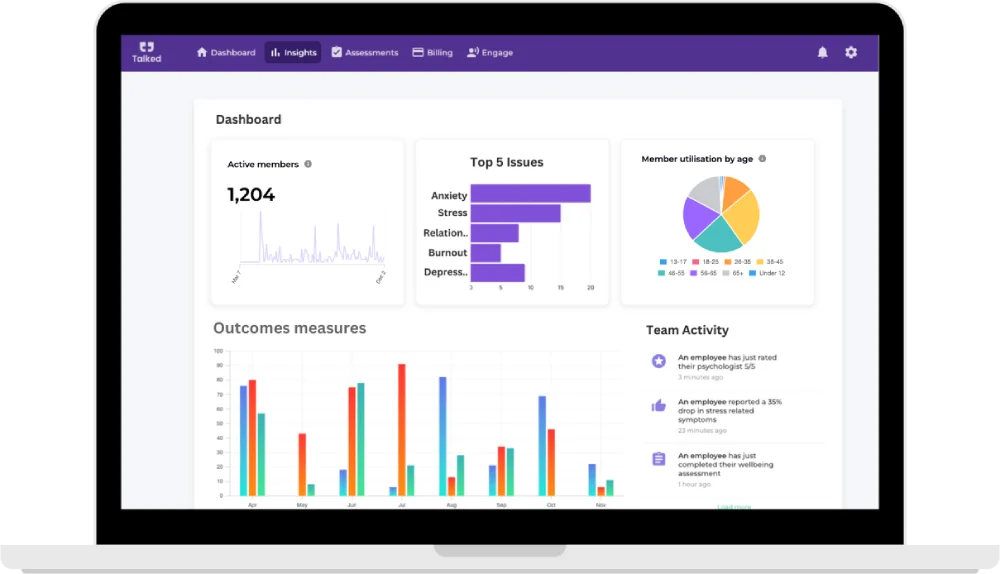
You get clear, confidential reporting that shows uptake and the themes your team is reaching out about, all de-identified so no individual is ever named. For a single venue or a multi-site group, that means you can see where pressure is building, whether it is fatigue in the kitchen, customer aggression on the floor or alcohol-related concerns, and act before it costs you good staff. The reporting also gives you an audit trail that you are managing psychosocial risk, which helps with your duty-of-care obligations. We help you launch it with simple resources your managers can put up in the staff room and talk through at a pre-service briefing.
Quickly, which matters when a hospitality crisis does not wait for a clinic to open. There are no waitlists. Once your venue is set up, your people get a simple link or code, book online in a few minutes, choose a counsellor and connect by video, phone or message. There is no GP referral and no long forms, and support is available outside standard hours, so a late finish or an early prep shift does not get in the way. Casual staff who move between your venues get the same fast access wherever they are working.
How Talked supports your people
References
- King et al., "Suicide among hospitality workers in Australia, 2006-2017," Social Psychiatry and Psychiatric Epidemiology, via PubMed Central (2022)
- Health Promotion International (Oxford Academic), analysis of the 2022-23 National Drug Strategy Household Survey (2025)
- Australian Bureau of Statistics, Working Arrangements, August 2025
- Jobs and Skills Australia, Accommodation and Food Services industry profile (ABS Labour Force Survey data, 2026)
- SuperFriend, Indicators of a Thriving Workplace survey (2022)
- Safe Work Australia, Latest trends in mental health conditions (2024)
Figures reflect publicly reported Australian data and are indicative. Talked is not affiliated with the organisations listed.
Give your team somewhere to turn after close



Talked acknowledges the Traditional Owners of the lands on which we operate and pays respect to Elders past, present, and emerging.
We welcome and respect people of all backgrounds, genders, sexualities, abilities, and cultures.
If you are in crisis or experiencing suicidal or homicidal thoughts, please contact 000 or access these resources for emergency assistance.
Get the Talked App